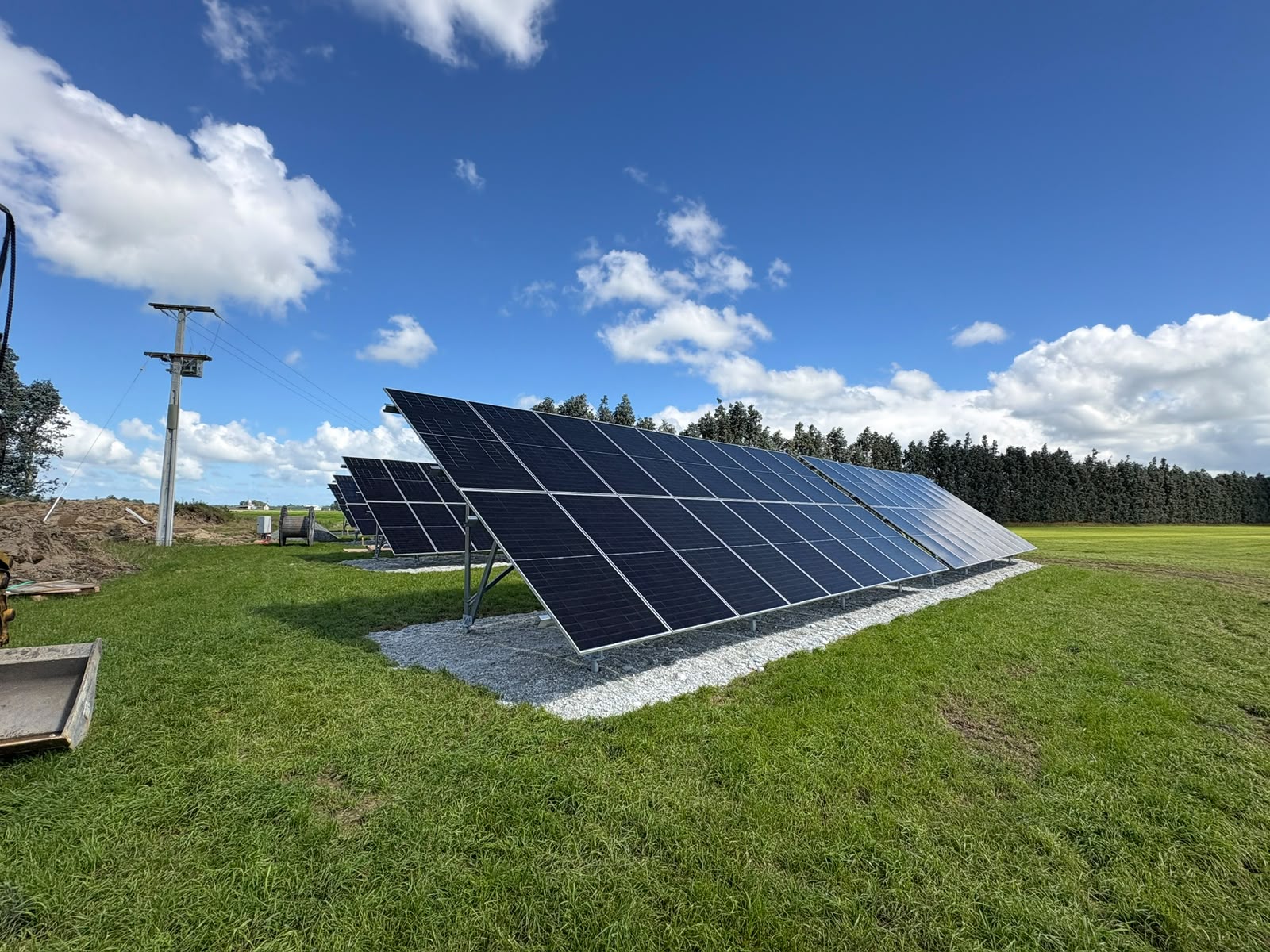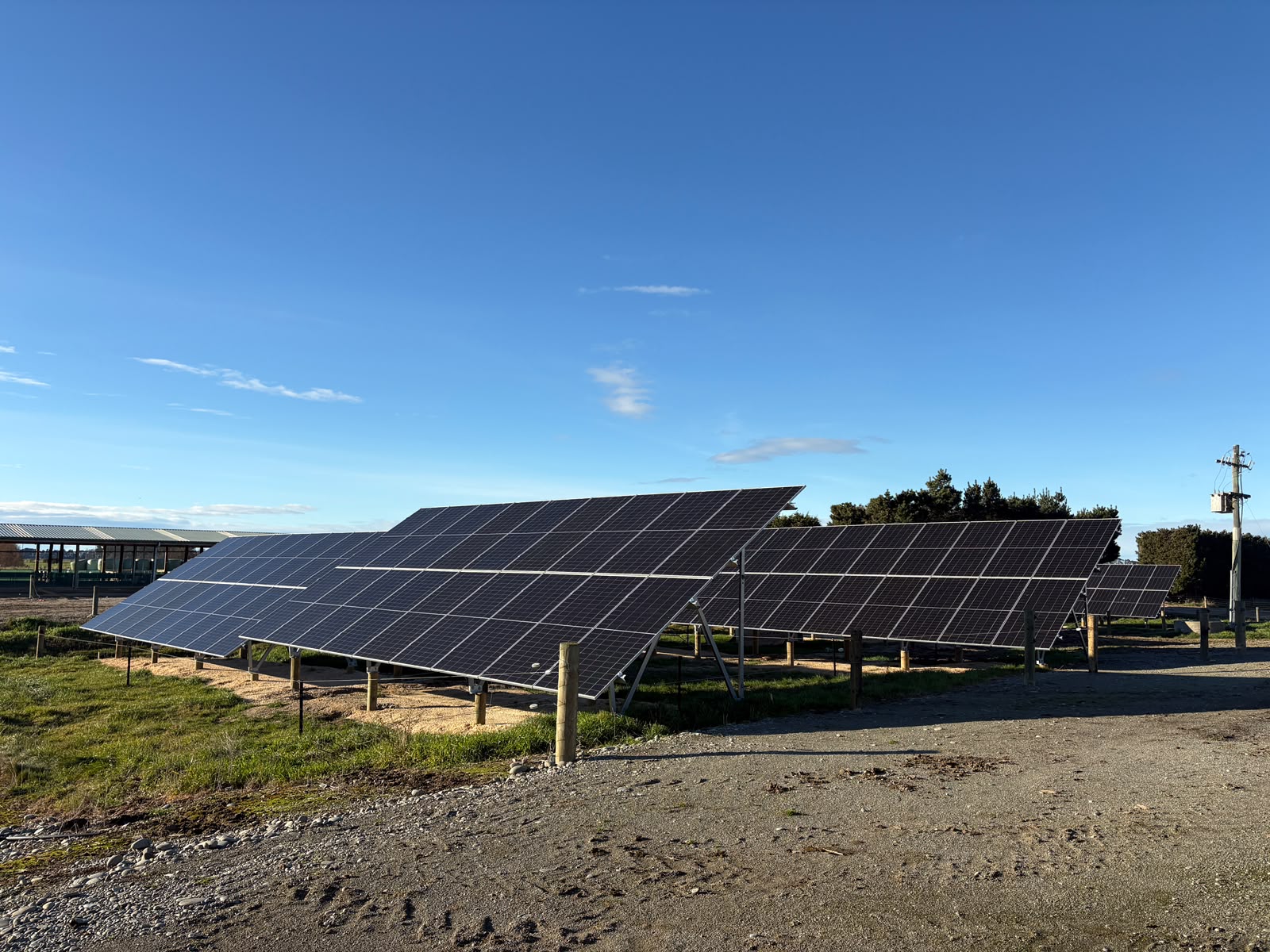
February is peak production season for solar energy. Long days + strong sun = solar systems performing at their best.
But how much of that power are you actually using? Because producing solar energy and using solar energy are two very different things.
The summer solar pattern
In February, most systems follow this rhythm:
Late morning to mid-afternoon: High production
Midday: Often lower on-site usage
Evening: Demand spikes (when the sun is gone)
For farms and businesses, that evening load might include:
- Refrigeration
- Milk cooling
- Irrigation pumps cycling
- Workshop activity
- Household evening demand
Without battery storage, excess daytime power is exported back to the grid – often at a lower rate than what you pay to buy it back later… and that’s where the opportunity lies.
What difference does a battery make?
A battery allows you to:
- Store excess solar produced during peak daylight
- Use that stored energy after sunset
- Reduce reliance on grid power
- Increase your self-consumption rate
- Add backup capability in the event of an outage
Instead of “selling low and buying high,” you’re keeping your own energy for when you need it most.
Why summer is the best time to think about storage
February is when you can clearly see:
- How much excess you’re generating
- Whether your system is exporting large amounts
- When your peak usage actually happens
- If your system is sized correctly
- High production highlights inefficiencies.
If you’re regularly exporting significant power during the day and buying it back in the evening, a battery could dramatically improve your system performance.
Power you can control
Solar reduces your exposure to rising power prices, while battery storage increases your control over when you use energy. When used in combination, they give you flexibility. And flexibility is what modern energy planning is all about.
How’s your power performing?
As we move through peak production, ask yourself:
- Are we exporting more than we’re using?
- When does our highest demand actually occur?
- Would stored energy reduce our evening grid reliance?
- Do we have backup if the power drops unexpectedly?
If you’re still unsure, a system performance review can make it clear very quickly. Don’t let peak summer production slip through your fingers. February is when solar performs at its best. It’s also when you can see whether your system is working as hard for you as it could be.
If you’d like a performance review or want to explore battery options, Ernest Energy can help you make the most of the sunshine.